

Workplace accidents rarely announce themselves. They creep up through overlooked hazards, momentary distractions, and environments where the gap between a close call and a serious injury is measured in centimetres or seconds. What stands between workers and harm is, more often than not, a well-placed sign. The following discussion explores how strategic safety signage can help workers recognise hazards across a range of industries — and what that reveals about the broader practice of workplace safety.
In brief
- Strategic safety signage acts as a vital, immediate intervention that redirects workers from potential hazards before accidents occur.
- Human brains process visual cues and color contrast significantly faster than written instructions, making well-designed signage more effective in high-pressure situations.
- Integrating visual warnings into the physical environment shapes employee behavior more reliably than safety training alone.
- Data from near-miss reporting helps organizations identify patterns and optimize the placement of signage to prevent future incidents.
- Real-world examples, such as floor markings in warehouses and allergen warnings in food production, demonstrate that clear markings lead to measurable declines in safety breaches.
- Effective safety signage requires viewing warnings as a dynamic system that is regularly reviewed and updated based on root cause analysis.
- Organizations that prioritize both safety and productivity through smart environmental design foster a workforce that operates with greater confidence and focus.
Why proper signage turned potential disasters into near-misses across different industries
It would be easy to dismiss safety signs as mere regulatory decoration — the laminated notices that workers walk past a hundred times without a second glance. But when hazard identification is built into the physical environment itself, something remarkable happens: behaviour changes before conscious thought even kicks in. Across manufacturing floors, construction sites, and logistics warehouses, visible warnings have repeatedly redirected workers away from danger in moments where there simply was no time to think. The effectiveness of safety protocols embedded in signage lies precisely in their immediacy — they do not require a meeting, a training session, or a supervisor. They speak directly and instantly.
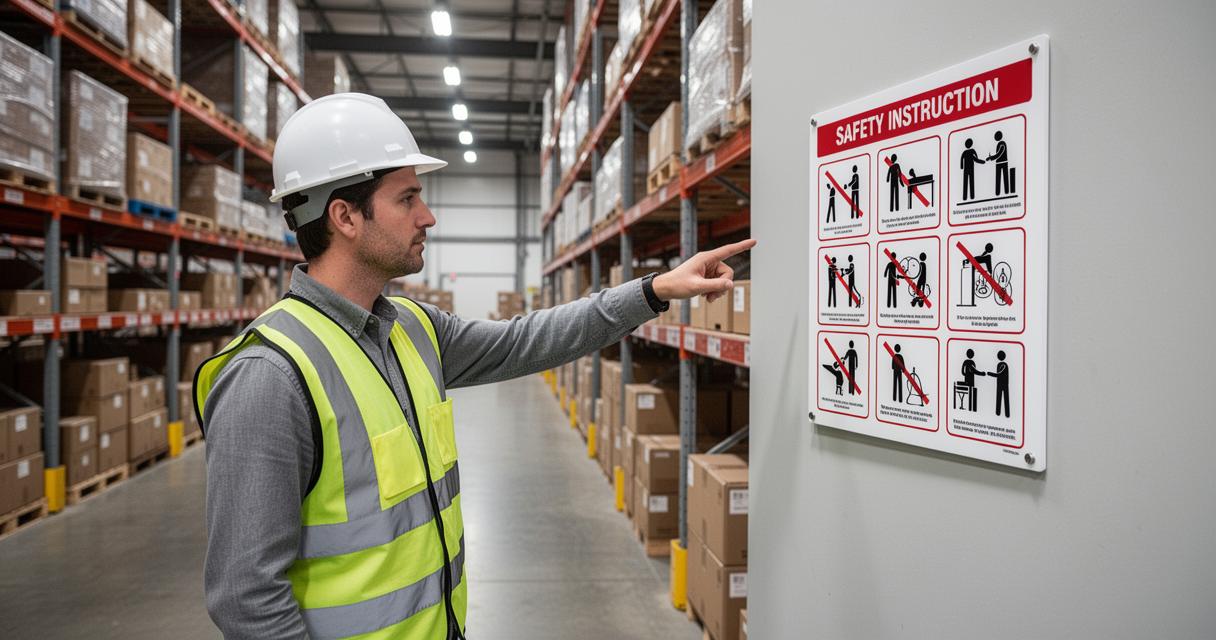
What makes safety signage effective when seconds matter most
The science of risk management makes clear that the human brain responds to visual contrast and symbolic cues far faster than it processes written instruction. A bold yellow triangle near a chemical storage area, or a vivid red prohibition sign at the entrance to a restricted zone, communicates urgency before the words are even read. This is not incidental to good signage design — it is the entire point. Organisations that invest in safety training often find that such training reinforces rather than replaces the value of clear visual warnings. When workers understand the reasoning behind a sign, they are more likely to respect it and less likely to develop the dangerous habit of tuning it out. The relationship between comprehension and compliance is, in short, inseparable from incident prevention.
How visible warnings changed employee behaviour patterns in hazardous environments
Research into human error has long struggled with a particular blind spot: the tendency to focus on individual psychology rather than the systemic conditions that make errors more likely. Yet evidence consistently shows that well-designed environments — including their signage — shape behaviour more reliably than training alone. In warehousing environments, for instance, floor markings delineating pedestrian routes from forklift pathways have reduced the frequency of near-miss incidents considerably. In chemical processing facilities, colour-coded pipe labelling has prevented workers from inadvertently opening the wrong valve. These are not dramatic stories with identifiable heroes — they are quiet successes, the accidents that simply did not happen, and they underscore why proactive reporting of near-misses is so valuable for understanding what is working.
Which workplace incidents were avoided thanks to strategically placed safety signs
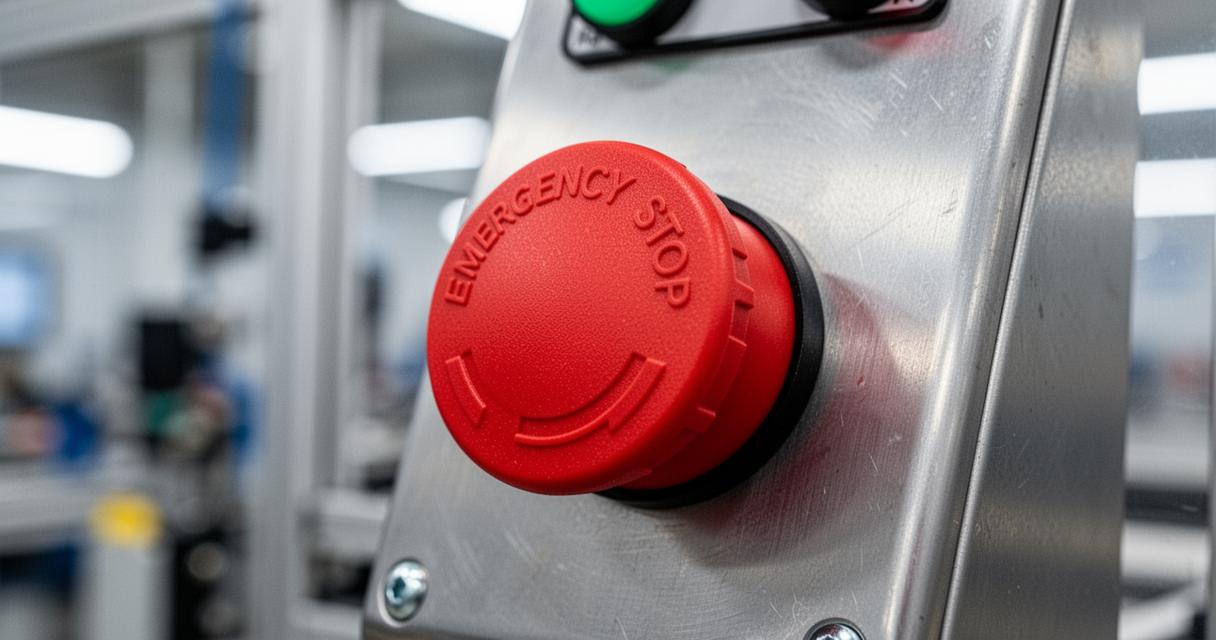
The challenge with documenting prevented accidents is, by definition, that they leave little trace. A worker who reads a warning sign and adjusts their behaviour generates no paperwork, no medical report, and no insurance claim. This is why near miss reporting has become such a critical discipline within modern incident reporting frameworks. Organisations that cultivate a culture where workers flag close calls — even when no harm occurred — accumulate data that reveals patterns invisible to traditional safety audits.
How clear markings can help prevent accidents
In a distribution centre with a poorly lit loading bay, reflective floor markings and clearly delineated hazard zones could make routes and hazards more visible to workers. In a food manufacturing facility, allergen warning signs at transition points between production lines could remind workers to follow cross-contamination protocols. These examples illustrate how safety data analysis can inform physical environment design.
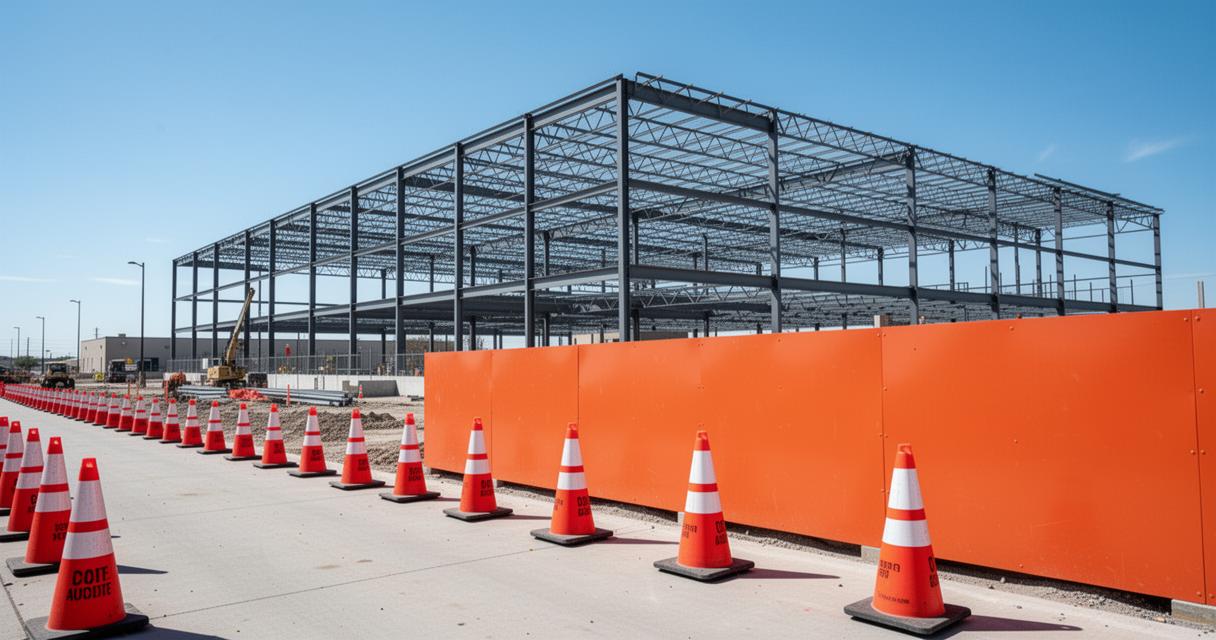
What these scenarios reveal about signage placement and design choices
What unites these scenarios is not the signs themselves but the thinking behind their placement. Root cause analysis of past incidents, combined with fault tree analysis of potential failure pathways, allows safety teams to anticipate where attention is most likely to lapse and where a well-positioned visual cue will have the greatest impact. Organisational failure is often a more significant contributor to workplace accidents than individual error — a point that researchers have emphasised for decades. When managers treat signage as a living system to be reviewed and updated rather than a static compliance requirement, the results speak for themselves. Operational efficiency improves alongside safety, because fewer disruptions mean smoother workflows, and a workforce that trusts its environment is a workforce that performs with greater confidence and focus. The lesson from every prevented accident is the same: visibility saves lives, and the organisations that take workplace productivity and safety seriously enough to invest in both will always be better placed to protect their people.